Understanding Coffee Origins: Ethiopia
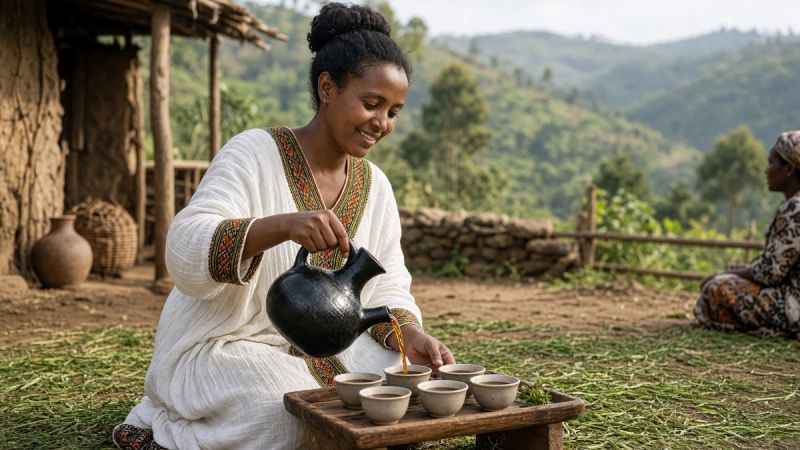
Ethiopia is widely regarded as the birthplace of coffee, rooted in the legend of Kaldi, a shepherd who noticed his goats becoming unusually energetic after eating bright red coffee cherries. From this story grew a rich coffee culture that remains central to Ethiopian identity.
Coffee Regions
Ethiopian coffee is diverse, with several renowned regions:
- Yirgacheffe – Known for its delicate floral and citrus notes, often tea-like in body with bright acidity.
- Sidamo – Offers fruitier profiles, frequently with berry and stone-fruit nuances, balanced sweetness, and lively acidity.
- Harrar – Typically naturally processed, producing wine-like, jammy, and dried-fruit flavors, often with a heavier body and rustic complexity.
These regional differences come from variations in altitude, microclimate, soil, and traditional processing practices.
Processing Methods
Two primary processing methods shape Ethiopian coffee profiles:
- Washed (Wet-Processed)
Cherries are pulped, fermented, and washed to remove mucilage before drying. This tends to produce clean, bright cups with pronounced acidity and clear flavor separation.
- Natural (Dry-Processed)
Whole cherries are dried with the fruit still on the seed, then hulled. This method intensifies fruity flavors and body, often yielding notes of ripe berries, tropical fruit, and wine-like sweetness.
The Coffee Ceremony
The Ethiopian coffee ceremony is a central social and cultural ritual, often performed multiple times a day in some households. It can last for hours and typically includes three rounds of coffee, each slightly weaker than the last.
Key elements:
- Roasting – Green coffee beans are washed and roasted in a pan over charcoal or an open flame, filling the room with aroma. The roasting pan is often passed around so guests can appreciate the fragrance.
- Grinding – The freshly roasted beans are ground, traditionally with a mortar and pestle.
- Brewing – The grounds are brewed in a jebena, a traditional clay pot, and the coffee is poured from a height into small cups, often through a filter of horsehair or similar material.
The ceremony symbolizes hospitality, respect, and community. Guests are invited to sit, converse, and share not only coffee but also stories, news, and blessings, making the experience as much about human connection as it is about the drink itself.
Ethiopia’s deep connection to coffee shows in its regions, processing, and rituals.
Regions
- Yirgacheffe: Bright, floral, tea-like cups with citrus and bergamot notes.
- Sidamo: Balanced acidity and sweetness, often with berry and wine-like qualities.
- Harrar: Wild, fruity, and intense, famous for its distinctive blueberry character.
Processing Methods
- Washed: Beans are pulped and washed before drying, yielding clean, bright flavors that clearly express regional character.
- Natural: Cherries dry with the fruit still on the bean, concentrating sugars and producing rich, fruity, and wine-like profiles.
Coffee Ceremony
The Ethiopian coffee ceremony is a social and cultural ritual. Green beans are roasted over an open flame, ground by hand, and brewed in a clay pot called a jebena. The process can last an hour or more and symbolizes hospitality, community, and mutual respect, with multiple rounds of coffee shared among guests.
Origin and genetic diversity: the World Coffee Research variety catalog, markets in the USDA FAS Coffee circular, and quality research at the UC Davis Coffee Center.
Related: altitude and origin; shop the store or visit Pino Suarez (+52 56 2915 1741).


