Altitude and Origin: How Elevation Affects the Flavor of Coffee
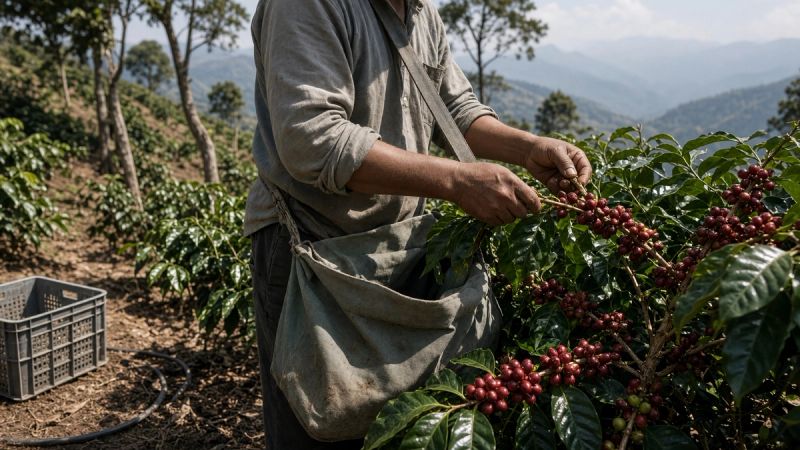
Summary of Key Coffee Insights
Altitude & Chemistry
- Higher elevations (1600–2000 m asl) slow cherry maturation.
- This promotes accumulation of complex sugars and organic acids.
- Chlorogenic acid can be up to ~15% higher than at 900 m.
- Cup impact: more pronounced citrus and floral acidity.
Origin, Terroir & Latitude
- Antigua, Guatemala (volcanic): mineral-rich soils + temperate microclimate → medium body, cocoa notes, sweet finish.
- Sidamo, Ethiopia (1800–2100 m): cool temps + indigenous varieties → jasmine, bergamot, bright acidity.
- Near-equatorial latitudes: consistent solar radiation + cool high-altitude nights → moderate plant stress that boosts aromatic compound synthesis.
Roasting High- vs Low-Altitude Beans
- High-altitude = higher density:
- Need stronger initial heat to penetrate the bean.
- Carefully control rate of rise to avoid scorching.
- Example profile for ~1900 m coffee:
- Charge: 185 °C
- Reach 205 °C by 5:00
- Extend development ~2:00 after first crack to emphasize acidity.
- Low-altitude (~900 m) = lower density, more porous:
- Lower charge temperature.
- Shorter roast to protect sugars and avoid flat, baked flavors.
Processing by Region & Typical Profiles
- Washed Central America: clarity, clean structure, elevated acidity.
- Natural Ethiopia: intense fruit, sweetness, often winey or berry-like.
- Brazil (800–1200 m, natural/honey): more body, nutty and chocolate notes.
- Colombia, Nariño (~2200 m microlots): sharp, high-pitched acidity, floral aromatics.
Elevation and terroir are well documented: the World Coffee Research variety catalog covers genetics × environment; the UC Davis Coffee Center publishes cup-quality research; and the USDA FAS coffee circular summarizes global origins and markets.
Next: our whole-bean buying guide, the TOLO shop, or Pino Suárez in Toluca (+52 56 2915 1741).