Pour-over
Chemex
A 1:18 Chemex recipe for 30 g of coffee: a 90 g bloom and three pours timed by the drawdown for a clean, bright cup.
Steps
- 1
Set the filter with the three-layer side toward the spout, rinse it with hot water to preheat the carafe, then discard that water.
- 2
Add 30 g of medium-coarse coffee, level the bed and tare your scale.
- 3
Bloom: pour 90 g of water at 93 °C, or right off the boil, and wet all the grounds.
- 4
Once the bloom has drained, pour in slow spirals up to 240 g.
- 5
When that pour has drained, pour up to 390 g.
- 6
When it drains again, pour up to 540 g.
- 7
Let it finish draining, remove the filter, swirl the carafe gently and serve.
What you need
A 6-cup Chemex, Chemex paper filters, a scale that reads in grams, a kettle (ideally gooseneck) and a grinder. Grind right before you brew. For choosing beans, see our guide to buying fresh whole-bean coffee.
Why this recipe works
A 1:18 ratio, 30 g of coffee to 540 g of water, makes two to three cups with clear sweetness and a light body. It's the same ratio as our V60 recipe, scaled up for a larger carafe.
The Chemex filter is thicker than most pour-over papers. It holds back more oils and fines, which is why the cup comes out so clean, but it also slows the water down. That's why the grind is medium-coarse: grind as fine as you would for a V60 and the water stalls and the cup turns bitter.
The 90 g bloom wets all the grounds and lets out the CO₂ from a fresh roast so the following pours move through evenly. Then three pours, up to 240, 390 and 540 g, keep the water level steady in the cone. Waiting for each pour to drain before the next one keeps water from running down the sides of the filter without touching the coffee, and lets the whole bed extract evenly.
As with any pour-over, follow the drawdown rather than a clock: if the bed has drained, pour again; if not, wait.
Adjusting for Toluca's altitude
Toluca sits at about 2,660 m, where water boils at around 91 °C. You won't reach the recipe's 93 °C, so use water right off the boil and don't let it cool. The Chemex is glass and loses heat quickly: rinse the filter with very hot water to preheat the carafe, and pour that water out before adding the coffee.
Slightly cooler water extracts more slowly. If the cup tastes flat or thin, grind a notch finer, without going as fine as a V60. Our note on water temperature for brewing explains how the boiling point changes with altitude.
Is your coffee bitter?
Most likely the grind is too fine for the thick filter and the coffee sits in contact with the water for too long. Grind coarser and check that the final drawdown isn't dragging on. A dark roast also turns bitter more easily. Change one variable at a time.
Is it sour or watery?
It is under-extracted. Grind a little finer, use water straight off the boil and make sure the bloom wets all the grounds. Check your amounts on the scale: 30 g of coffee to 540 g of water. If the cup is still thin, try a little more coffee before changing the water.
Is it taking too long to drain?
Check the filter first: the three-layer side goes toward the spout. If the paper seals against the glass, air can't escape and the water stalls. If the filter is seated correctly, the grind is too fine; open it up a notch. Pouring gently so you don't push fines down also helps. More detail in the science of grinding.
What you need
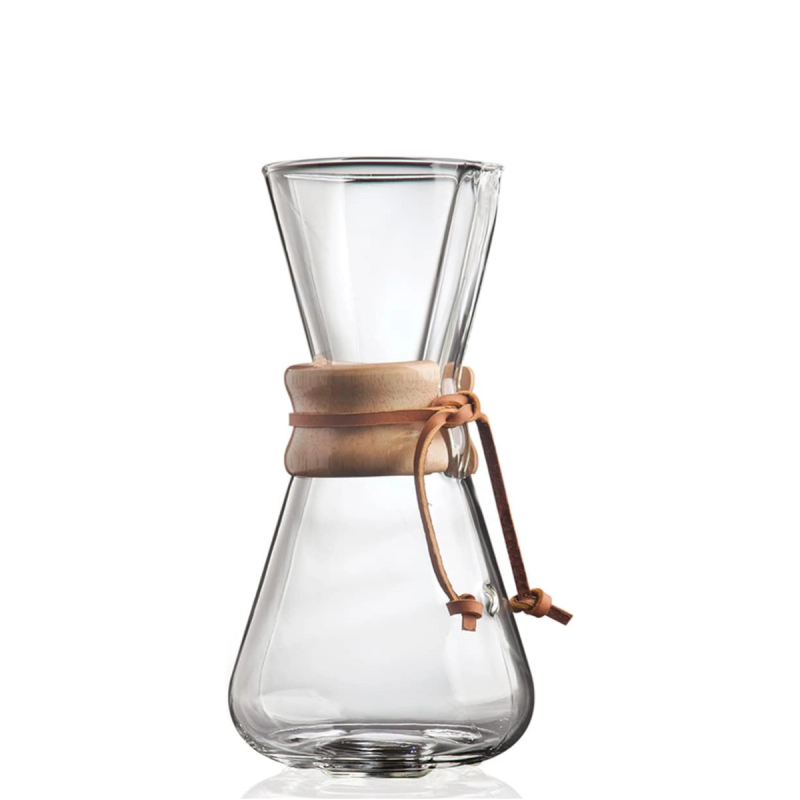
- Chemex paper filters
- Scale
- Gooseneck kettle