Blog
Coffee stories, brewing tips, and notes from the TOLO roastery and the farms we source from.
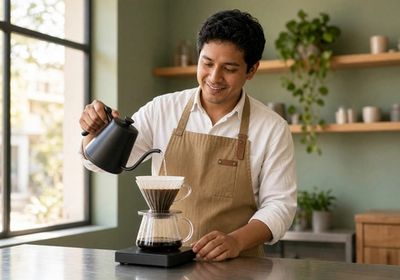
Orea O1 recipe at home: 1:18 pour-over step by step
Orea O1 recipe 1:18 (20 g / 360 g): 60 g bloom, three pours at 93 °C, medium grind 600–800 µm, plus tips for dialing it in at home.
Flat-bottom vs cone dripper: Orea, Kalita Wave and V60
Flat-bottom or cone: how the Orea O1, Kalita Wave, Origami and V60 change your cup, what UC Davis and SCA research found, and how to choose your dripper.

French press at home: dose, grind and brew time
French press guide for home: 15 g coffee, 250 g water, coarse grind and a 4-minute steep, plus how to fix bitter, sour or weak cups.
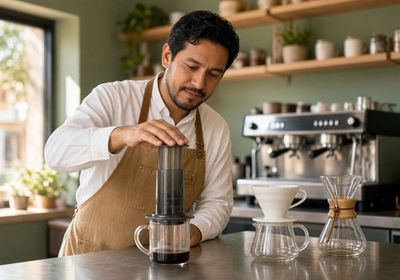
Home AeroPress recipe: dose, water and grind
AeroPress recipe for home: 11 g coffee, 200 g water at 95 °C, medium-fine grind, and how to adjust if the cup is bitter, sour or weak.

Ceremonial matcha: how to choose and prepare it
Ceremonial matcha: what the grade means, how to judge color and aroma, how to whisk it with a chasen, and how to store it so it keeps.

How to choose fresh whole-bean coffee for home
Fresh whole-bean coffee: what to read on the bag (roast date, origin, process) and why to buy whole bean and grind it at home.

Specialty cafés in central Toluca: a short guide
A short guide to specialty cafés in central Toluca: what to look for at the bar, how to get there, and what to expect at TOLO Pino Suárez, minutes from the historic center.
AeroPress vs V60, Chemex & espresso: comparison
AeroPress vs V60, Chemex, and espresso: dose, grind, water temp, bloom and press time, when to pick each method, and cup expectations.
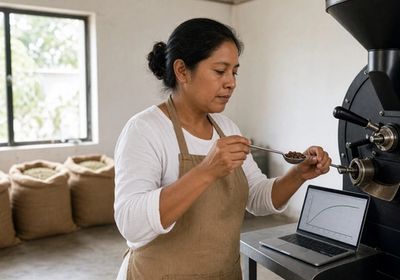
The Art of Coffee Roasting: Science and Technique
Heating beans triggers Maillard reactions, caramelisation and pyrolysis. Maillard reactions start around 140 °C and produce aromatic compounds and colour; caramelisation intensifies at 160 °C. The first crack occurs between 190 °C and 196 °C when internal pressure causes expansion and release of steam. Second crack arises between 224 °C and 229 °C, indicating a dark roast where sugars degrade and bitter flavours increase. Roast profile control involves managing rate of rise and total time. For light filter roasts, a typical profile lasts 9–11 minutes with final temperature 202 °C. Medium roasts extend to 12–14 minutes with final temperatures 210–218 °C. Maintaining a 10 °C per minute rise in the first half develops balanced complexity, while reducing the rate in the development phase (after first crack) highlights acidity and sweetness. Weight loss and colour correlate: beans lose 12–20 % of mass due to moisture evaporation and CO₂ release. An Agtron colour of 65‑75 (light) associates with fruity and floral flavours, while 35‑45 (dark) corresponds to bitter chocolate and nutty profiles. For home roasting, drum and fluid-bed roasters are available. Drum roasters provide precise control of airflow and heat transfer, ideal for 250 g to 1 kg batches. A typical session in a 500 g drum roaster charges at 160 °C and increases to 200 °C in the first 6 minutes. Fluid bed roasters use hot air to suspend beans, suitable for small batches (50‑150 g) and allow quicker profiles around 6–8 minutes. It's crucial to use a thermocouple to measure bean temperature and record the profile. Control software such as Artisan or Cropster enables plotting the temperature curve and annotating events like first crack and start of development. Roast level affects solubility and grind particle size. Light roasts require finer grinds and longer extraction times to achieve 20 % extraction yield; dark roasts, being more soluble, need coarser grinds and reduced extraction times to avoid bitterness. Understanding the science and technique of roasting not only improves your ability to select beans in a coffee shop, but also opens the door to experimenting with profiles at home. With practice and attention to variables like temperature, time and development, you can highlight the intrinsic notes of each origin.

Guide to Specialty Coffee Shops: How to Find the Perfect Café
Choosing a specialty coffee shop goes beyond proximity or décor. This practical guide shows you how to evaluate bean quality, barista technique, and the signals that set an exceptional café apart.
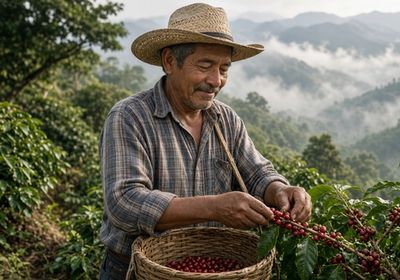
Altitude and Origin: How Elevation Affects the Flavor of Coffee
Altitude and origin determine bean density and the compounds that develop in coffee. High-altitude beans tend to show bright acidity and floral aromas, whereas low-elevation coffees are sweeter and earthier; soil, climate and varietals in each region add unique nuances. This comprehensive guide explores how elevation shapes flavor profiles.

Holiday Coffee Gift Guide 2025
Curated recommendations for every coffee lover on your list, from beginners to seasoned baristas.