The Art of Pour Over Coffee
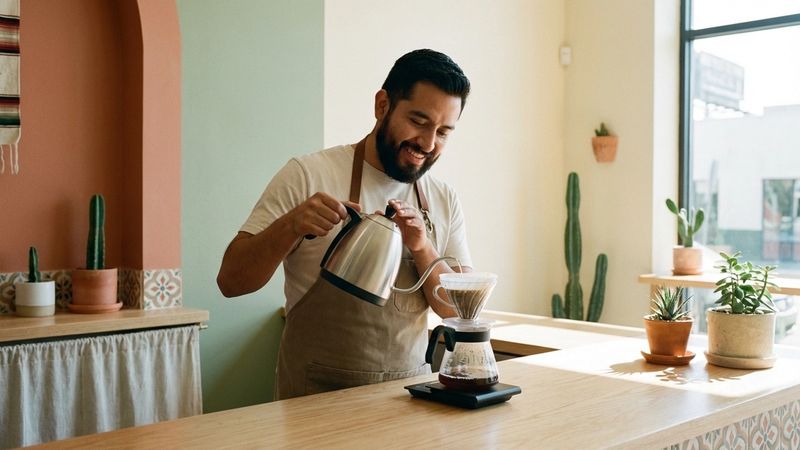
Barista performing pour-over coffee brewing with a V60 dripper, carefully pouring hot water in concentric circles over freshly ground coffee

Pour over coffee is a manual brewing method that allows complete control over every extraction variable. From water temperature to pour speed, every decision impacts the final flavor of your cup.

Popular Devices

The most popular devices include the V60, Chemex, and Kalita Wave. The V60 with its 60-degree angle and internal spirals offers a fast, bright extraction. The Chemex, with its thick filter, produces a cleaner, lighter cup.

Pour-over coffee is a manual brewing method that emphasizes both precision and artistry, giving the brewer full control over variables like grind size, water temperature, pour rate, and total brew time so the final cup clearly expresses the coffee’s character.

Popular Devices

  • Hario V60 – Designed with spiral ridges and a large bottom opening, it encourages faster flow rates and can produce bright, complex cups when paired with an appropriate grind and pour technique.
  • Chemex – Uses thick, proprietary paper filters that remove many oils and fine particles, resulting in an exceptionally clean, crisp-tasting cup with high clarity.
  • Kalita Wave – Features a flat-bottom dripper with three small drainage holes and a wave-shaped filter, promoting even extraction and making it more forgiving of minor technique inconsistencies.

The Bloom

A proper pour-over begins with the bloom phase:

  1. Add ground coffee to the filter and level the bed.
  2. Pour just enough hot water to fully saturate the grounds—approximately twice the weight of the dry coffee (a 1:2 water-to-coffee ratio for this step).
  3. Allow the coffee to sit for 30–45 seconds.

During this time, fresh coffee releases trapped carbon dioxide, causing visible bubbling and expansion. This degassing step is crucial for promoting even water contact and uniform extraction in the subsequent pours.

Pour Technique

After the bloom:

  1. Pour in slow, steady circles, starting from the center and spiraling outward, then back toward the center.
  2. Maintain a relatively consistent water level in the dripper rather than letting it drain completely between pours.
  3. Avoid pouring directly onto the filter walls to prevent channeling and under-extraction.

Aim for a total brew time of 2:30–4:00 minutes, adjusting grind size and pour rate based on your specific device:

  • Finer grind / slower pour → longer brew time, potentially more extraction.
  • Coarser grind / faster pour → shorter brew time, lighter extraction.

The objective is a controlled, steady flow that highlights sweetness and complexity while minimizing bitterness or harshness.
Suggested Readings

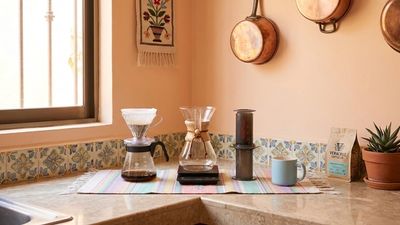
Comparison of coffee brewing methods showing V60, Chemex, AeroPress, and espresso machine side by side with their respective coffee outputs

Coffee brewing methods compared: V60, Chemex, AeroPress, and espresso

Detailed comparison of coffee brewing methods including V60, Chemex, AeroPress, and espresso, with grind, temperature, and time parameters to optimize extraction and flavor at high altitudes.

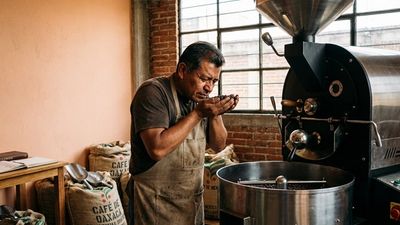
Coffee roaster carefully monitoring beans in a modern roasting machine, with freshly roasted coffee in the cooling tray releasing aromatic smoke

The Art of Coffee Roasting: Science and Technique

Heating beans triggers Maillard reactions, caramelisation and pyrolysis. Maillard reactions start around 140 °C and produce aromatic compounds and colour; caramelisation intensifies at 160 °C. The first crack occurs between 190 °C and 196 °C when internal pressure causes expansion and release of steam. Second crack arises between 224 °C and 229 °C, indicating a dark roast where sugars degrade and bitter flavours increase. Roast profile control involves managing rate of rise and total time. For light filter roasts, a typical profile lasts 9–11 minutes with final temperature 202 °C. Medium roasts extend to 12–14 minutes with final temperatures 210–218 °C. Maintaining a 10 °C per minute rise in the first half develops balanced complexity, while reducing the rate in the development phase (after first crack) highlights acidity and sweetness. Weight loss and colour correlate: beans lose 12–20 % of mass due to moisture evaporation and CO₂ release. An Agtron colour of 65‑75 (light) associates with fruity and floral flavours, while 35‑45 (dark) corresponds to bitter chocolate and nutty profiles. For home roasting, drum and fluid-bed roasters are available. Drum roasters provide precise control of airflow and heat transfer, ideal for 250 g to 1 kg batches. A typical session in a 500 g drum roaster charges at 160 °C and increases to 200 °C in the first 6 minutes. Fluid bed roasters use hot air to suspend beans, suitable for small batches (50‑150 g) and allow quicker profiles around 6–8 minutes. It's crucial to use a thermocouple to measure bean temperature and record the profile. Control software such as Artisan or Cropster enables plotting the temperature curve and annotating events like first crack and start of development. Roast level affects solubility and grind particle size. Light roasts require finer grinds and longer extraction times to achieve 20 % extraction yield; dark roasts, being more soluble, need coarser grinds and reduced extraction times to avoid bitterness. Understanding the science and technique of roasting not only improves your ability to select beans in a coffee shop, but also opens the door to experimenting with profiles at home. With practice and attention to variables like temperature, time and development, you can highlight the intrinsic notes of each origin.

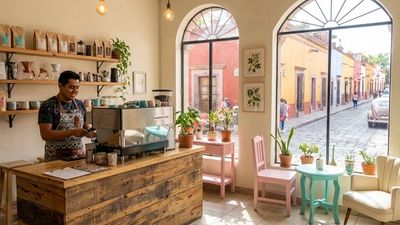
Interior of a modern specialty coffee shop with baristas preparing pour-over coffee behind the counter, showcasing professional brewing equipment and fresh coffee beans

Guide to Specialty Coffee Shops: How to Find the Perfect Café

Choosing a specialty coffee shop goes beyond proximity or décor. This practical guide shows you how to evaluate bean quality, barista technique, and the signals that set an exceptional café apart.