← Back to Blog

Holiday Coffee Gift Guide 2025
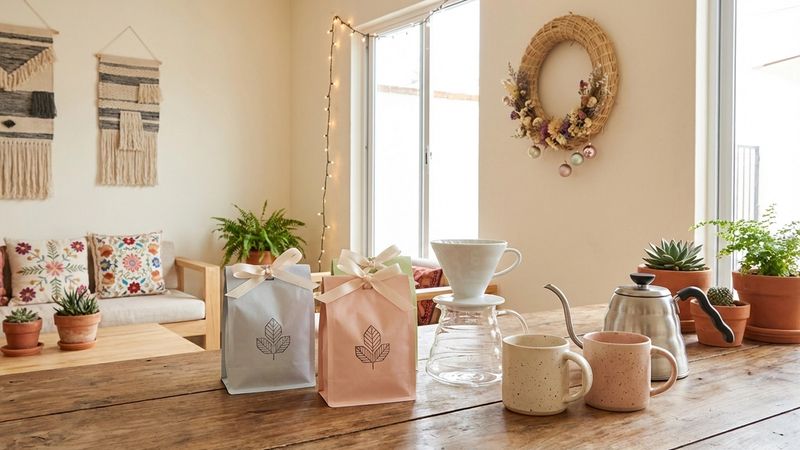
Beautifully wrapped coffee gift set with artisan beans, brewing equipment, and festive holiday decorations

Holiday Coffee Gift Guide: Thoughtful Ideas for Every Coffee Lover

The holidays are the perfect time to share your love of coffee with friends and family. Whether you're shopping for a seasoned home barista or someone just beginning their coffee journey, this guide covers thoughtful gifts at every price point.

For the Beginner: Starting Their Coffee Journey

New coffee enthusiasts benefit from approachable equipment that delivers great results without overwhelming complexity.

AeroPress ($35–40)

The AeroPress is forgiving, portable, and produces excellent coffee. It's perfect for travelers, office workers, or anyone who wants quality coffee without a steep learning curve. Include a bag of fresh beans and they're set.

Hario V60 Starter Kit ($25–35)

A ceramic V60 dripper, paper filters, and a simple kettle make an elegant introduction to pour-over brewing. The ritual of manual brewing often hooks people on specialty coffee.

Coffee Subscription ($15–25/month)

Gift a 3‑month subscription from a quality roaster. Recipients discover new origins and roasters while enjoying fresh beans delivered to their door. Many roasters offer gift subscriptions specifically for the holidays.

For the Home Brewer: Upgrading Their Setup

These gifts help dedicated home brewers take their coffee to the next level.

Baratza Encore Grinder ($170)

The single most impactful upgrade for any home brewer. Fresh‑ground coffee dramatically improves cup quality, and the Encore offers consistent burr grinding at an accessible price point. This is the gift that keeps giving with every cup.

Fellow Stagg EKG Kettle ($165–195)

A gooseneck kettle with precise temperature control transforms pour‑over brewing. The Stagg's design is beautiful enough to display on the counter, and features like hold‑temperature mode make brewing more convenient.
Suggested Readings

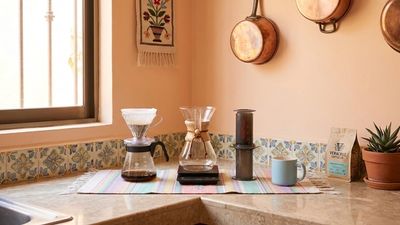
Comparison of coffee brewing methods showing V60, Chemex, Aeropress, and espresso machine side by side with their respective coffee outputs

Coffee Brewing Methods Compared: V60, Chemex, Aeropress, and Espresso

Detailed comparison of coffee brewing methods including V60, Chemex, Aeropress and espresso, with grind, temperature and time parameters to optimize extraction and flavor at high altitudes.

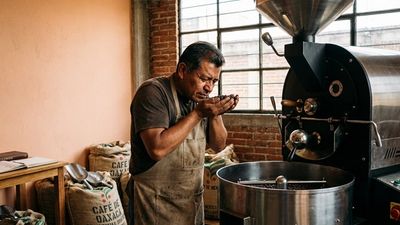
Coffee roaster carefully monitoring beans in a modern roasting machine, with freshly roasted coffee in the cooling tray releasing aromatic smoke

The Art of Coffee Roasting: Science and Technique

Heating beans triggers Maillard reactions, caramelisation and pyrolysis. Maillard reactions start around 140 °C and produce aromatic compounds and colour; caramelisation intensifies at 160 °C. The first crack occurs between 190 °C and 196 °C when internal pressure causes expansion and release of steam. Second crack arises between 224 °C and 229 °C, indicating a dark roast where sugars degrade and bitter flavours increase. Roast profile control involves managing rate of rise and total time. For light filter roasts, a typical profile lasts 9–11 minutes with final temperature 202 °C. Medium roasts extend to 12–14 minutes with final temperatures 210–218 °C. Maintaining a 10 °C per minute rise in the first half develops balanced complexity, while reducing the rate in the development phase (after first crack) highlights acidity and sweetness. Weight loss and colour correlate: beans lose 12–20 % of mass due to moisture evaporation and CO₂ release. An Agtron colour of 65‑75 (light) associates with fruity and floral flavours, while 35‑45 (dark) corresponds to bitter chocolate and nutty profiles. For home roasting, drum and fluid-bed roasters are available. Drum roasters provide precise control of airflow and heat transfer, ideal for 250 g to 1 kg batches. A typical session in a 500 g drum roaster charges at 160 °C and increases to 200 °C in the first 6 minutes. Fluid bed roasters use hot air to suspend beans, suitable for small batches (50‑150 g) and allow quicker profiles around 6–8 minutes. It's crucial to use a thermocouple to measure bean temperature and record the profile. Control software such as Artisan or Cropster enables plotting the temperature curve and annotating events like first crack and start of development. Roast level affects solubility and grind particle size. Light roasts require finer grinds and longer extraction times to achieve 20 % extraction yield; dark roasts, being more soluble, need coarser grinds and reduced extraction times to avoid bitterness. Understanding the science and technique of roasting not only improves your ability to select beans in a coffee shop, but also opens the door to experimenting with profiles at home. With practice and attention to variables like temperature, time and development, you can highlight the intrinsic notes of each origin.

Interior of a modern specialty coffee shop with baristas preparing pour-over coffee behind the counter, showcasing professional brewing equipment and fresh coffee beans

Guide to Specialty Coffee Shops: How to Find the Perfect Café

Choosing the right coffee shop goes beyond proximity. The specialty coffee scene has grown rapidly in recent years, driven by consumers who value bean quality, roast level, and a complete sensory experience. For coffee to be considered specialty grade, the Specialty Coffee Association rates beans above 80 out of 100 on its sensory table, measuring aroma, body, and balance. This article explores key factors for finding the perfect café. Bean quality and roast The first indicator of a good café is the origin and freshness of its beans. Look for establishments that provide information on origin, varietal, and roast date. Specialty coffee is often single origin, cultivated at altitudes above 1,200 m above sea level. Elevation influences bean density and flavour complexity; agricultural studies have shown that coffee grown at higher altitudes tends to have more acidic and floral profiles. Roast level also matters; a light roast allows fruity and floral notes to shine, while darker roasts yield chocolate and caramel flavours. Barista skills and brew methods A trained barista makes the difference. Certification programmes from the SCA ensure knowledge in extraction, grinder calibration, and equipment maintenance. Ask if the café offers different brew methods: espresso, pour-over (V60), AeroPress, or Chemex. Manual methods like the pour-over, when done correctly, extract around 20 % of the coffee’s soluble compounds to achieve balance; an extraction time of 3–4 minutes with water at 93 °C is ideal for most brews. Consistency in coffee weight (e.g., 18 g for a double espresso) and brew ratio determines the drink’s intensity. Atmosphere and experience The design of the space affects taste perception. Sensory psychology research indicates that calm, aesthetically pleasing environments can enhance appreciation of complex flavours. Consider lighting, music, and seating comfort. Evaluate whether the café offers reliable Wi-Fi and power outlets if you plan to work. Service culture is another aspect; baristas should be willing to explain each coffee’s profile and recommend according to your preferences. Sustainability and community More consumers value sustainability. Seek cafés that source from farms with responsible agricultural practices, fair trade, and support programmes for producers. Some roasters publish full traceability of their lots, including prices paid to farmers. A good café can also be a community hub; many spaces host cuppings, brewing workshops, or guest roaster presentations, letting you broaden your knowledge and palate. With these criteria, you can navigate the growing specialty coffee landscape and choose the café that best suits your taste and lifestyle.