Coffee Tasting Notes Explained
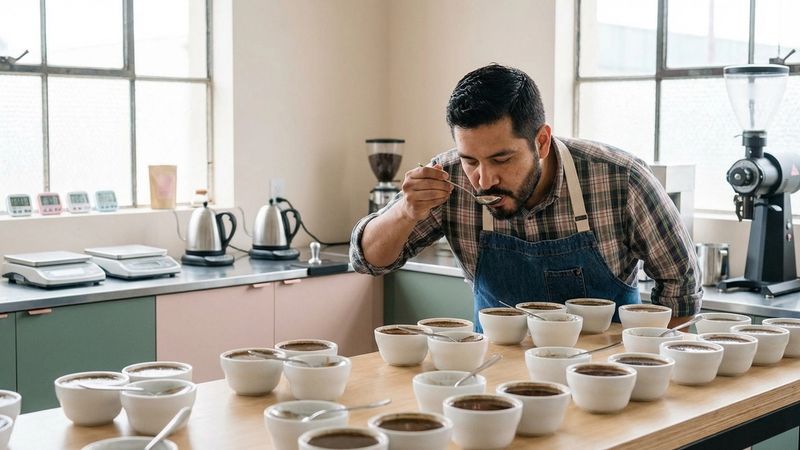
Coffee cupping session with multiple cups arranged on a wooden table for tasting notes evaluation

Tasting notes are the language of coffee flavor. By learning common descriptors and practicing mindful tasting, you can better understand what you enjoy and why.

How to Use Tasting Notes

  • Match your preferences:
  • Like bright, lively cups? Look for fruity or floral notes (often in African coffees).
  • Prefer comfort and sweetness? Choose coffees with chocolate, nut, or caramel notes (common in Latin American origins).
  • Enjoy deep, grounding flavors? Try coffees with earthy or spicy notes (frequent in some Asian origins).

Connecting Flavor to Origin

  • African coffees

Often described as fruity (berry, citrus, stone fruit) and floral (jasmine, bergamot). These coffees can feel vibrant, tea-like, and aromatic.

  • Latin American coffees

Commonly show chocolate, nuts (almond, hazelnut), and caramel. They tend to be balanced, sweet, and approachable.

  • Asian coffees

Frequently feature earthy, woody, herbal, or spicy notes (cedar, clove, tobacco). They can feel heavy-bodied and comforting.

Using the SCA Flavor Wheel

Start broad, then get specific:

  1. Identify the main taste family:
  • Sweet: honey, sugar, ripe fruit
  • Acidic: citrus, berry, wine-like brightness
  • Bitter: dark chocolate, heavy roast, cocoa
  • Salty: mineral, broth-like, savory
  1. Narrow down the category:
  • If you sense fruit, ask: citrus, berry, or stone fruit?
  • If you sense sweetness, ask: sugar, caramel, or chocolate?
  • If you sense nuts, ask: almond, hazelnut, peanut, walnut?

The wheel helps you move from a vague impression ("fruity") to a precise descriptor ("blackberry" or "grapefruit").

Simple Palate-Training Routine

Use this step-by-step approach whenever you brew:

  1. Smell the dry grounds
  • Gently shake the container or bag.
  • Ask: Do I get fruit, chocolate, nuts, flowers, spices, or earth?
  1. Smell the wet aroma (after adding water)
  • Lean in and inhale slowly.
  • Compare: What changed from dry to wet? Did new notes appear (e.g., more chocolate, more floral, more spice)?
  1. Slurp the coffee
  • Take a small spoonful and slurp loudly to spray it across your tongue and up toward your nose.
  • Notice: initial flavor, aftertaste, and texture (light, silky, creamy, heavy).
  1. Write quick notes
  • Use simple words at first: fruity, nutty, chocolatey, floral, earthy, spicy, bright, smooth, bitter, sweet.
  • Over time, push yourself to be more specific: lemon vs. orange, milk chocolate vs. dark chocolate, almond vs. hazelnut.

Tips to Improve Faster

  • Taste side by side: Brew two different coffees and compare them directly. It’s easier to notice differences than to describe one coffee in isolation.
  • Use real foods as references: Smell or taste actual fruits, nuts, chocolates, and spices so you can recognize them in coffee.
  • Be patient: Your vocabulary and sensitivity grow with repetition. The more you taste and write, the more subtle nuances you’ll start to notice.

By combining origin knowledge, the SCA flavor wheel, and a simple tasting routine, you’ll steadily build a more confident and precise coffee palate.
Suggested Readings

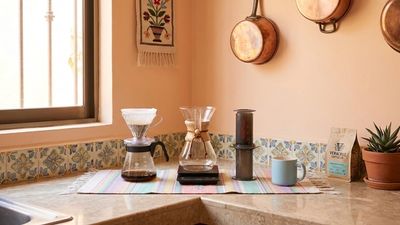
Comparison of coffee brewing methods showing V60, Chemex, AeroPress, and espresso machine side by side with their respective coffee outputs

Coffee brewing methods compared: V60, Chemex, AeroPress, and espresso

Detailed comparison of coffee brewing methods including V60, Chemex, AeroPress, and espresso, with grind, temperature, and time parameters to optimize extraction and flavor at high altitudes.

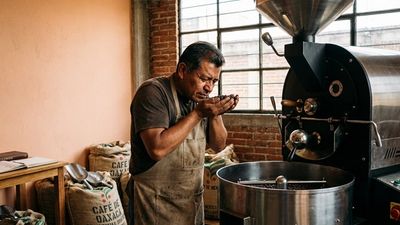
Coffee roaster carefully monitoring beans in a modern roasting machine, with freshly roasted coffee in the cooling tray releasing aromatic smoke

The Art of Coffee Roasting: Science and Technique

Heating beans triggers Maillard reactions, caramelisation and pyrolysis. Maillard reactions start around 140 °C and produce aromatic compounds and colour; caramelisation intensifies at 160 °C. The first crack occurs between 190 °C and 196 °C when internal pressure causes expansion and release of steam. Second crack arises between 224 °C and 229 °C, indicating a dark roast where sugars degrade and bitter flavours increase. Roast profile control involves managing rate of rise and total time. For light filter roasts, a typical profile lasts 9–11 minutes with final temperature 202 °C. Medium roasts extend to 12–14 minutes with final temperatures 210–218 °C. Maintaining a 10 °C per minute rise in the first half develops balanced complexity, while reducing the rate in the development phase (after first crack) highlights acidity and sweetness. Weight loss and colour correlate: beans lose 12–20 % of mass due to moisture evaporation and CO₂ release. An Agtron colour of 65‑75 (light) associates with fruity and floral flavours, while 35‑45 (dark) corresponds to bitter chocolate and nutty profiles. For home roasting, drum and fluid-bed roasters are available. Drum roasters provide precise control of airflow and heat transfer, ideal for 250 g to 1 kg batches. A typical session in a 500 g drum roaster charges at 160 °C and increases to 200 °C in the first 6 minutes. Fluid bed roasters use hot air to suspend beans, suitable for small batches (50‑150 g) and allow quicker profiles around 6–8 minutes. It's crucial to use a thermocouple to measure bean temperature and record the profile. Control software such as Artisan or Cropster enables plotting the temperature curve and annotating events like first crack and start of development. Roast level affects solubility and grind particle size. Light roasts require finer grinds and longer extraction times to achieve 20 % extraction yield; dark roasts, being more soluble, need coarser grinds and reduced extraction times to avoid bitterness. Understanding the science and technique of roasting not only improves your ability to select beans in a coffee shop, but also opens the door to experimenting with profiles at home. With practice and attention to variables like temperature, time and development, you can highlight the intrinsic notes of each origin.

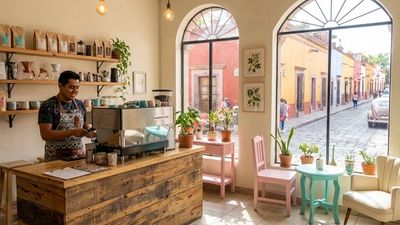
Interior of a modern specialty coffee shop with baristas preparing pour-over coffee behind the counter, showcasing professional brewing equipment and fresh coffee beans

Guide to Specialty Coffee Shops: How to Find the Perfect Café

Choosing a specialty coffee shop goes beyond proximity or décor. This practical guide shows you how to evaluate bean quality, barista technique, and the signals that set an exceptional café apart.